Radiator Question

triz

Member
Joined
Apr 22, 2013
Posts
746
I was on GMPartsEast looking at a radiator that I need to replace. I have a slight crack along the seam at the top. It also looks like its leaking from along the where the plastic part of the tank meets the core.

So looking at the website it looks like you can replace the plastic inlet part and the gasket underneath. Anyone tried this?

Here is the link.

http://www.gmpartseast.com/Page_Product/PartList.aspx?MakeUrl=Chevy&CatalogUrl=&ComponentCode=TS0120005&SectionCode=01&EngineCode=LL8&TransmissionCode=M30&ModelCode=T15506&Vin=1GNDT13S132310704&ProductionDate=0-0-0&VehicleInfo=Bravada%20or%20Trailblazer;2003;4WD&CatalogCode=56S&Year=2003
 
In all my time on the various forums, I don't recall anyone ever doing it this way. I think if a radiator is old enough for the top to crack, the bottom is close behind and the innards are about to show signs of cloggage.

Entirely new radiators aren't that expensive, are they?

But you could be the first. Take pics! :thumbsup:
 
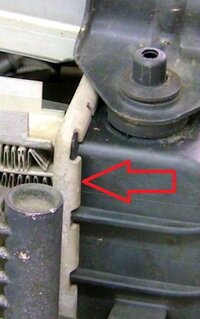
I watched my buddy do this once on a BMW, had multiple tabs holding the tank to the core..is this how it's secured in place? He had a jig designed for those tabs and was a PITA but sometimes it's much more cost effective this way. I think our radiators are reasonably priced and would save you a headache going new.

Not sure if ours are setup this way but just some info.
 

Attachments

  • Tank1.jpg
    Tank1.jpg
    50.3 KB · Views: 20
That is the way mine is set-up. My radiator seems like its in good condition minus the plastic. Why they make these parts out of plastic i will never know.

My question was purely out of curiosity. I have to replace the motor mounts and I am going to replace the radiator at the same time. It was just something I came across and wanted to know if it was ever attempted.
 
triz said:
I was on GMPartsEast looking at a radiator that I need to replace. I have a slight crack along the seam at the top. It also looks like its leaking from along the where the plastic part of the tank meets the core.

So looking at the website it looks like you can replace the plastic inlet part and the gasket underneath. Anyone tried this?

Here is the link.

http://www.gmpartseast.com/Page_Product/PartList.aspx?MakeUrl=Chevy&CatalogUrl=&ComponentCode=TS0120005&SectionCode=01&EngineCode=LL8&TransmissionCode=M30&ModelCode=T15506&Vin=1GNDT13S132310704&ProductionDate=0-0-0&VehicleInfo=Bravada%20or%20Trailblazer;2003;4WD&CatalogCode=56S&Year=2003
Radiator shops in Mexico replace the damaged plastic end if the radiator passes their inspection, of course only at the request of the customer...
 
My 95 S10 developed a slight seep from one of the end tanks. A web search turned up several threads on repairing the "plastic" material. The key to success seemed to be using the right filler material compatible with the plastic melting it into the crack. You might look into this as an option. I decided to go with a new radiator, Spectra Premium I think it was. Cost about $100. Exact fit and it appeared the core was made in Canada.
Out of curiosity I removed the end tanks and found the crack, viewed from the inside, was longer than what appeared on the exterior. Also re-crimping those tabs might take more finesse than I was willing to risk. You might be able to reuse the gasket but it would be a risk. The link you provided showed the gasket wasn't available. My core was in very good condition with only a minimal amount of debris in the bottom passages.
Another factor was end tanks for my nearly 20 yr old truck were not readily available.
You might explore if any local radiator shops actually replace just the end tanks, I didn't. It's over 80 mi. round trip to the nearest town or 250 rt to Phoenix so I opted to let UPS bring one from Amazon!
 
  • Like
Reactions: triz
AbsoluteZero said:
My 95 S10 developed a slight seep from one of the end tanks. A web search turned up several threads on repairing the "plastic" material. The key to success seemed to be using the right filler material compatible with the plastic melting it into the crack. You might look into this as an option.
Interesting, I've not heard of this. I would expect a better fix would be to fusion-weld (which is a fancy term for both the plastic being applied AND the plastic being repaired being heated to a certain point, for PVC it's about 260 celsius but this changes based on material of course) and then brought together and cooled. Otherwise, you're just relying on the stickiness of the melted plastic being applied to hold everything up instead of literally grafting the two together.
 

Forum Statistics

Threads
24,309
Posts
649,115
Members
20,839
Latest member
e916

Members Online

No members online now.